When I was a child in Toronto, my mom once told my sister and me that you could travel from one end of the city to the other without ever leaving the ravines. That idea stayed with me, until years later when I started to write The Roughling.
Toronto is fortunate to have an urban forest that is unique in the world, with winding rivers, creeks and forests. Its ravines, created by ancient glaciers, are an unexpected and remarkable feature in such a large, busy city.
Here are some resources and activities that you can use to learn more about the wild spaces in your own neighbourhood, find out what makes Toronto’s ravines special, and also have some fun!
The Roughlands Near You
When Ambrose, Stan and Aurora first meet Aurelius the fox, he tells them that, “the Roughlands are anywhere a wild thing grows. They are the rolling forests of a ravine or the crack in the pavement where a tenacious weed survives.”
Do you live near the Roughlands? It could be a park, your backyard, a tree outside your window, or even a little weed growing next to the road.
Describe the Roughlands near where you live. What kind of adventures would you have there? What kinds of roughlings would you meet?
Secret Passages
The note from Ambrose’s dad is what leads him, Stan and Aurora to discover the secret passage in his home.
If you had a secret passage in your house, imagine where it would be hidden. Why do you think it was built, and where would you end up if you followed it?
Characters
Ambrose, Stan and Aurora meet many interesting and unusual characters when they escape into the Roughlands.
Who is your favourite character in The Roughlands? It could be an animal or a person. What is special about them? Imagine meeting them, then draw a picture or write a scene about it.
Beech’s Hollow
Beech’s Hollow is a roughling village sheltered by the many roots, trunks and branches of an ancient Beech tree.
If you lived at Beech’s Hollow, what would your house look like? Who would your roughling neighbours be? Draw or paint a picture that shows your house, either on the inside or on the outside.
Chocolate Chip Cookies
Before Ambrose introduces Stan to Ward and Scout, the Guardians of Glenwood, he grabs a bag of chocolate chip cookies — Made with real butter. Here’s an amazing chocolate chip cookie recipe that you can make at home with your family. They’re especially yummy on a cold or rainy day.
Makes 12-18 cookies
You’ll need:
- 1¼ cups flour
- ½ tsp baking soda
- ½ tsp salt
- 4 oz unsalted butter
- ¾ cup sugar
- 1tsp vanilla extract
- 1 egg
- 1 cup semi-sweet chocolate chips, or chunks of dark chocolate
An adult’s help or permission ☺
- Preheat your oven to 375 °F. Line a baking sheet with parchment paper. Mix the flour, baking soda and salt together in a small bowl.
- In a larger bowl, cream the butter, sugar and vanilla, then mix in the egg.
- Stir in the dry ingredients, then add the chocolate chips.
- Form medium scoops of batter, and space them out on the baking sheet.
- Bake in the preheated oven for 10-12 minutes. They’re much better if they’re a bit undercooked. Remember to let them cool before eating, and enjoy!
Recipe adapted from ‘Chocolate Chip Cookies’ in David Wood Dessert Book, © 1989 David Wood, Whitecap Books.
Drawings and Maps
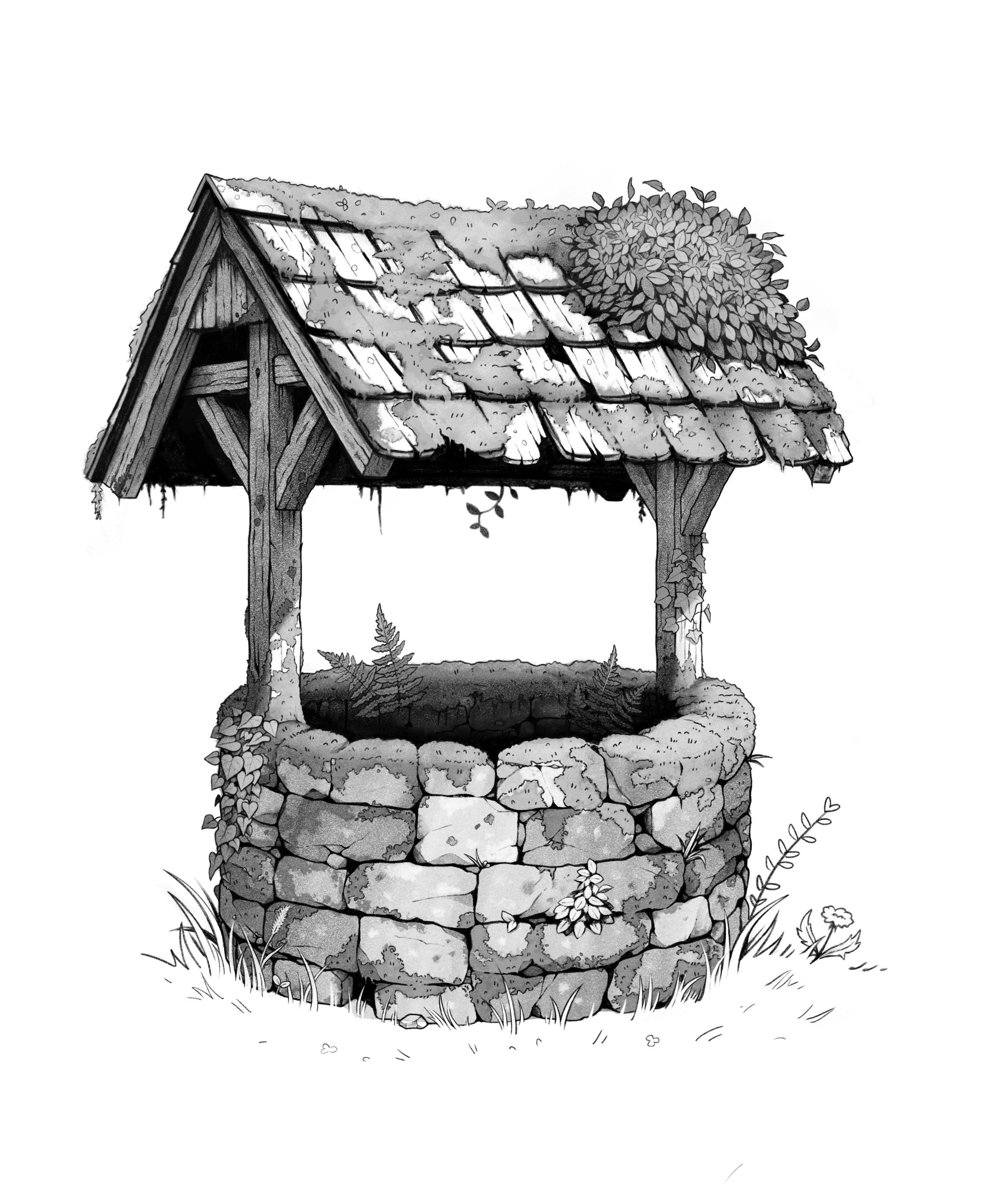
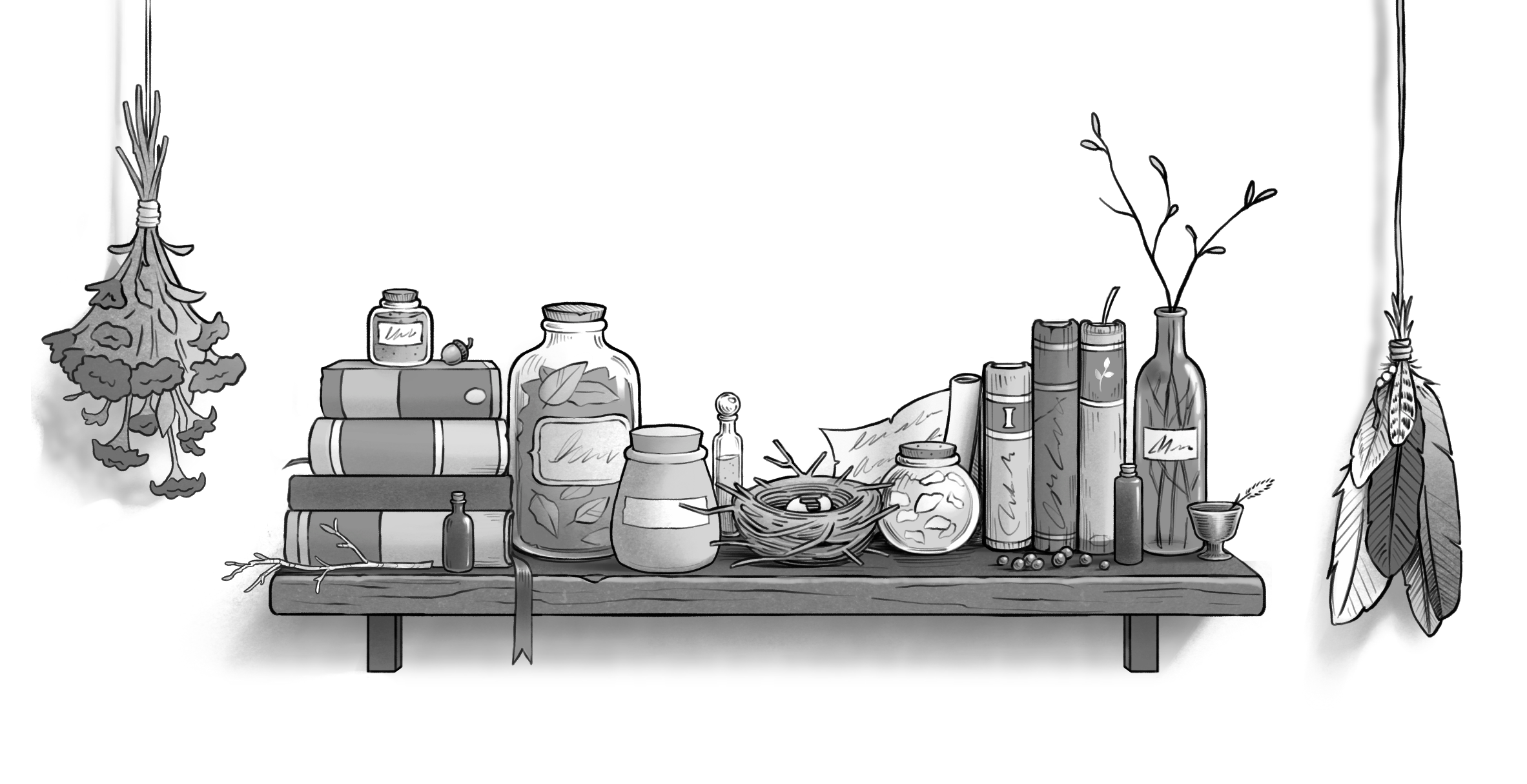
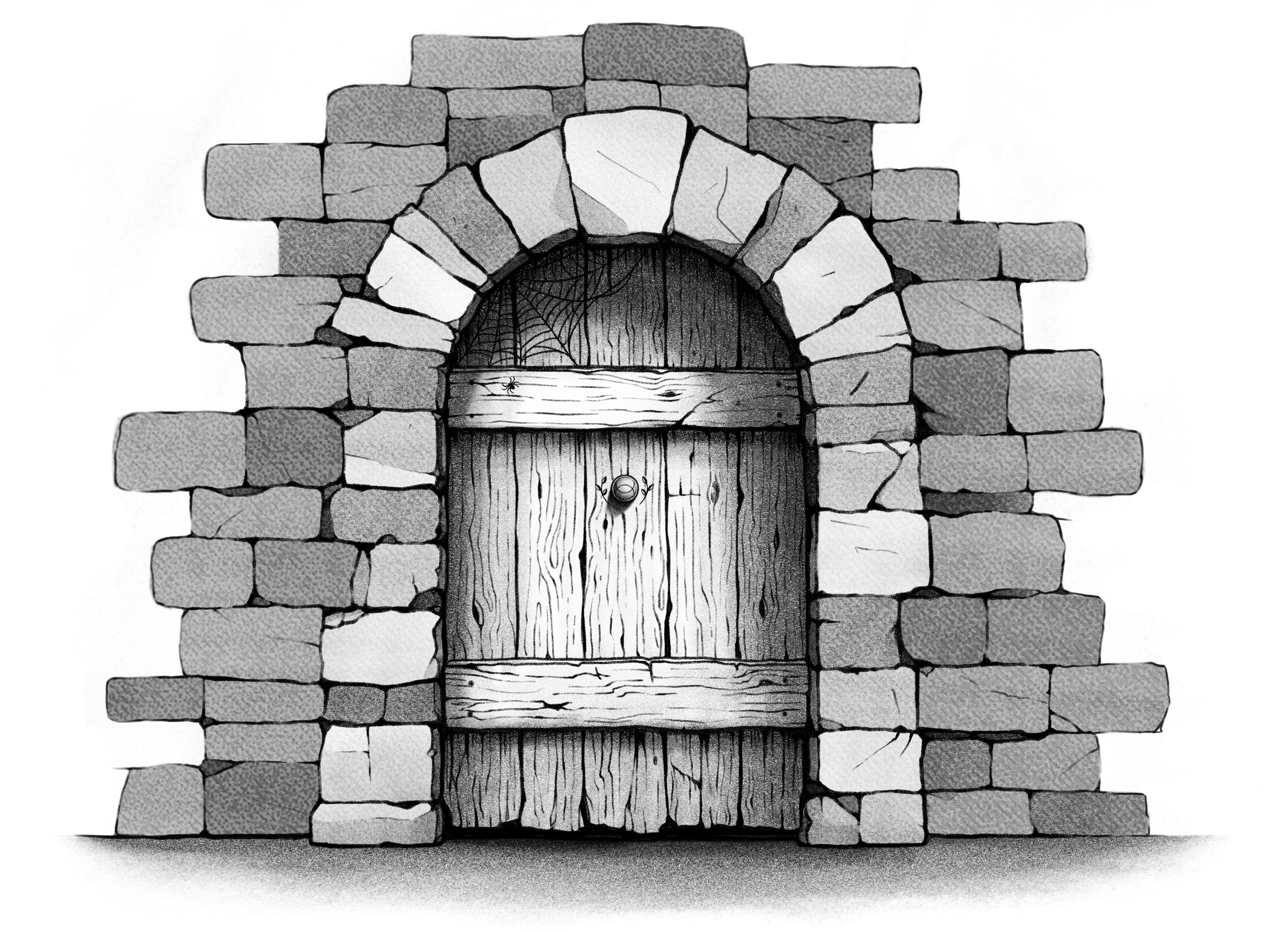
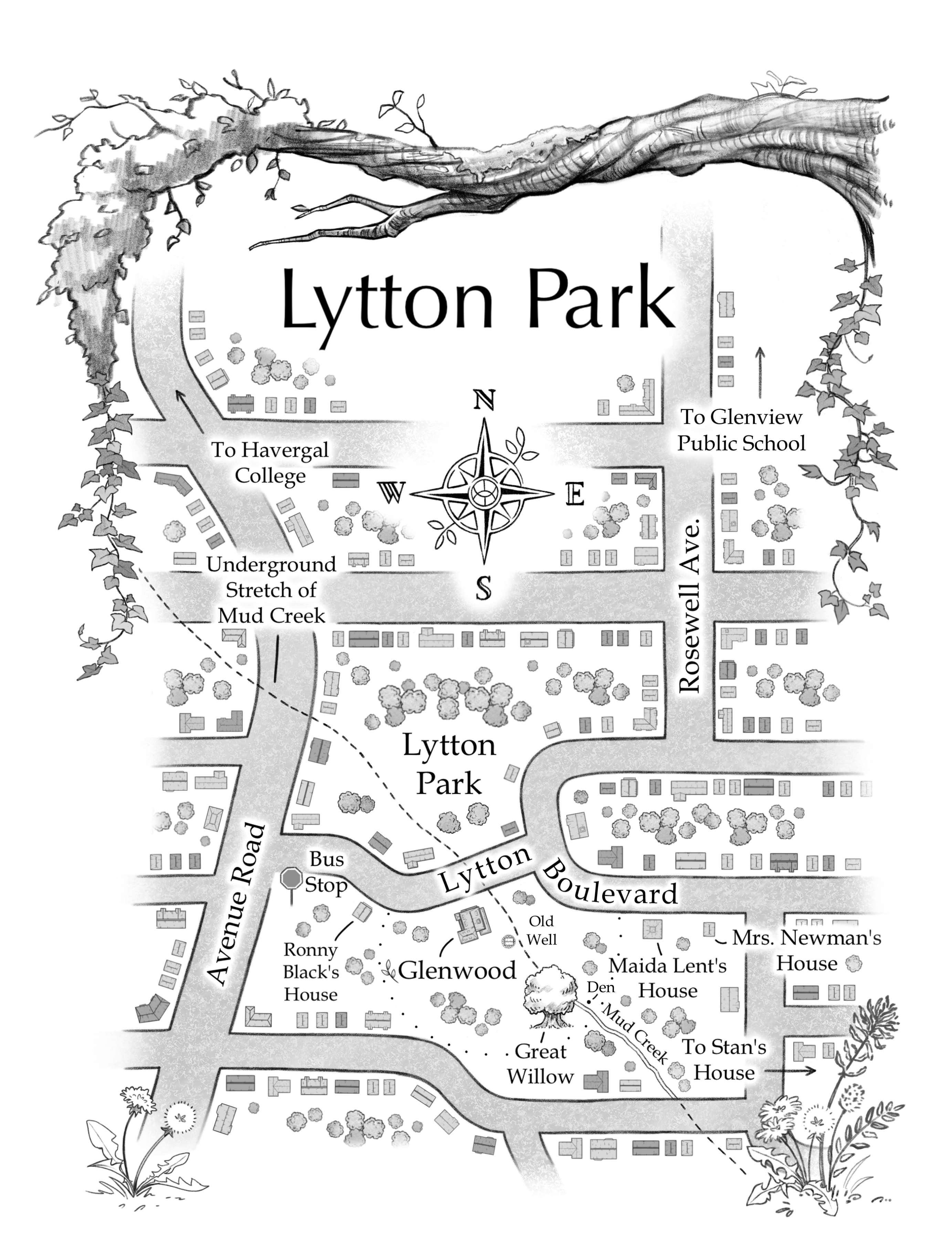
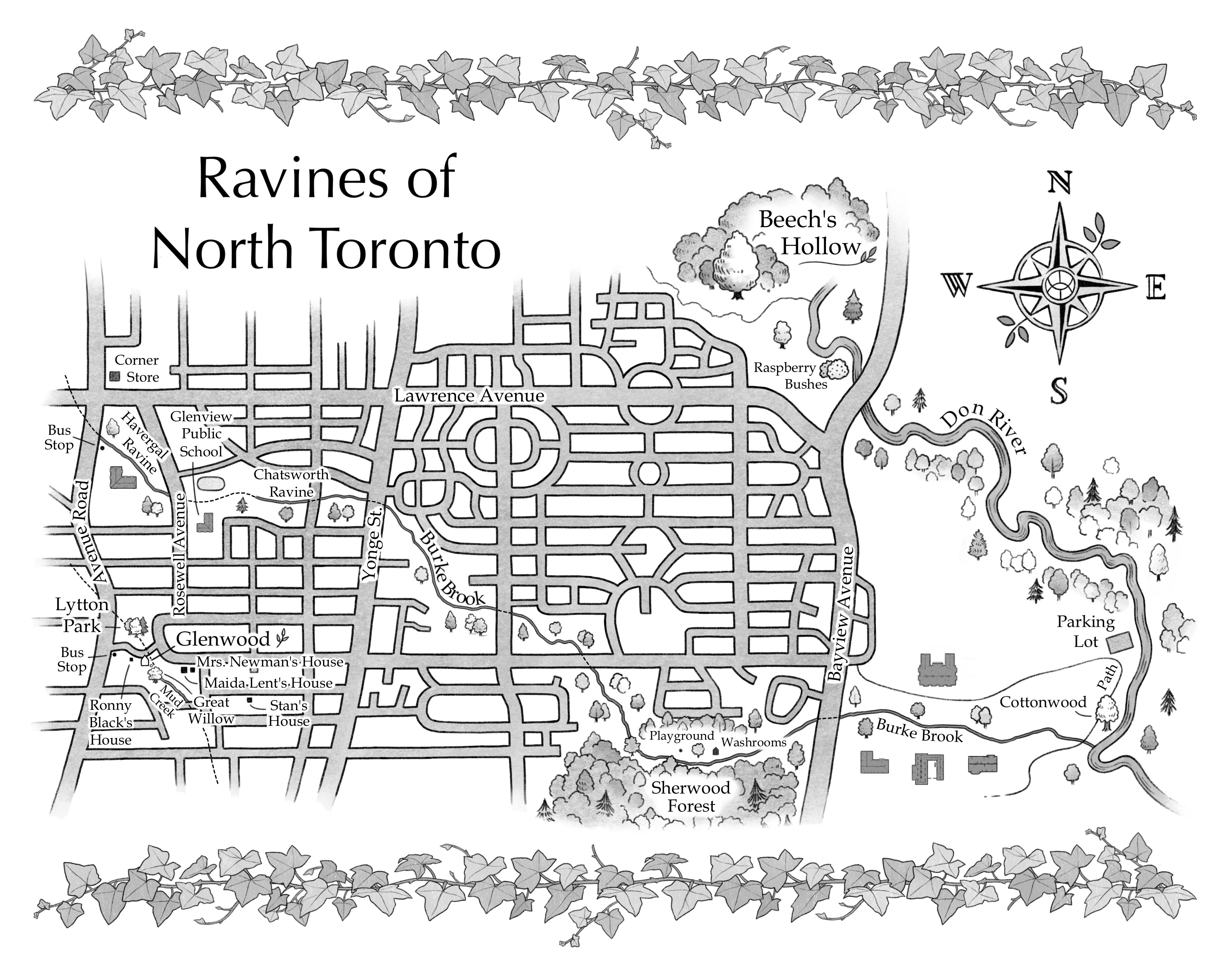
Here are some drawings from The Roughling, as well as maps of Ambrose’s neighbourhood and the Roughlands that he discovers. If you have a printer, you can download them to colour them in.
All maps and illustrations by Grace Thibault.
Native Plants and Animals
Many of the plants, trees and animals in Ambrose’s story are native to the Toronto area. For the plants and trees, this means that they have been growing in this region for thousands of years.
Native plants are important for many reasons:
- They are a trusted food source for local animals, birds and insects
- Their roots are well adapted to local conditions
- They are more resistant to pests and diseases
- They are an important link in the history of the land and the rich traditions of Indigenous Peoples.
Can you identify any of the native plants or animals from The Roughling in your neighbourhood? If you live outside the Toronto area, do you know which plants and animals are native to your region?
Extra Resources and Websites to Explore
Toronto is located on the traditional territories of many Indigenous Peoples, including the Mississaugas, the Anishinaabe, the Huron, the Wendat and the Haudenosaunee. In recognition of the thousands of years of Indigenous stewardship of the land and water, learning more about the impacts of development on our rivers and forests can help us make better choices, so that our wild spaces continue to flourish and provide a home for the many plants and animals who live alongside us.
- The Mississaugas were the most recent First Nation people to inhabit the place where the city of Toronto now stands. Learn more about their history and the importance they placed on the land, local watersheds and rivers at the Mississaugas of the Credit First Nation Website.
- The Evergreen Brick Works in Toronto offers programming for children and youth to learn about and explore Toronto’s ravine systems.
- The Toronto and Region Conservation Authority offers education opportunities, field trips, school visits, and programmes that explore early Indigenous life.
- When cities grow, streams and creeks are often buried underground to clear land for development. Lost River Walks is an excellent resource that provides guides and maps of the lost and buried rivers and creeks of Toronto.
- Havergal College is a school in Toronto that’s mentioned in The Roughling. Read this CBC Feature on Daylighting to learn about why they decided to uncover a previously buried section of Burke Brook.
- Read National Geographic's overview of the Toronto Ravines to explore what makes this urban forest so unique.
- Geared to grades 4, 5 and 6, WWF Canada Kids has an interactive website for kids to explore nature across the country with educational resources, lesson plans, quizzes, and fun activities.